


Finasteride & Minoxidil
Finasteride & Minoxidil
Finasteride is a FDA-approved prescription pill that prevents the spread of receding hairlines and boosts hair regrowth.
Minoxidil foam is a FDA-approved topical hair loss treatment that promotes hair regrowth.
BUNDLE & SAVE
Couldn't load pickup availability

Finasteride & Minoxidil
HOW IT WORKS
HOW IT WORKS
Finasteride
- Blocks the production of DHT, the hormone responsible for male pattern baldness
- Works on a receding hairline and for overall hair thinning
- 90% effective at treating hair loss according to clinical studies
Minoxidil
- Increases new hair growth in men with male pattern baldness
- Works at the crown and middle of the head
- Increases hair growth by up to 35% according to clinical studies
ABOUT THIS TREATMENT
ABOUT THIS TREATMENT
FINASTERIDE (fi • NAS • teer • ide) is FDA-approved to treat male pattern baldness. This medicine is not for use by women.
MINOXIDIL (mi • NOX • i • dill) is used to increase new hair growth in cases of hereditary hair loss. When applied to the scalp, this medicine can promote hair growth in men with male pattern baldness. Women should not use extra-strength minoxidil products.


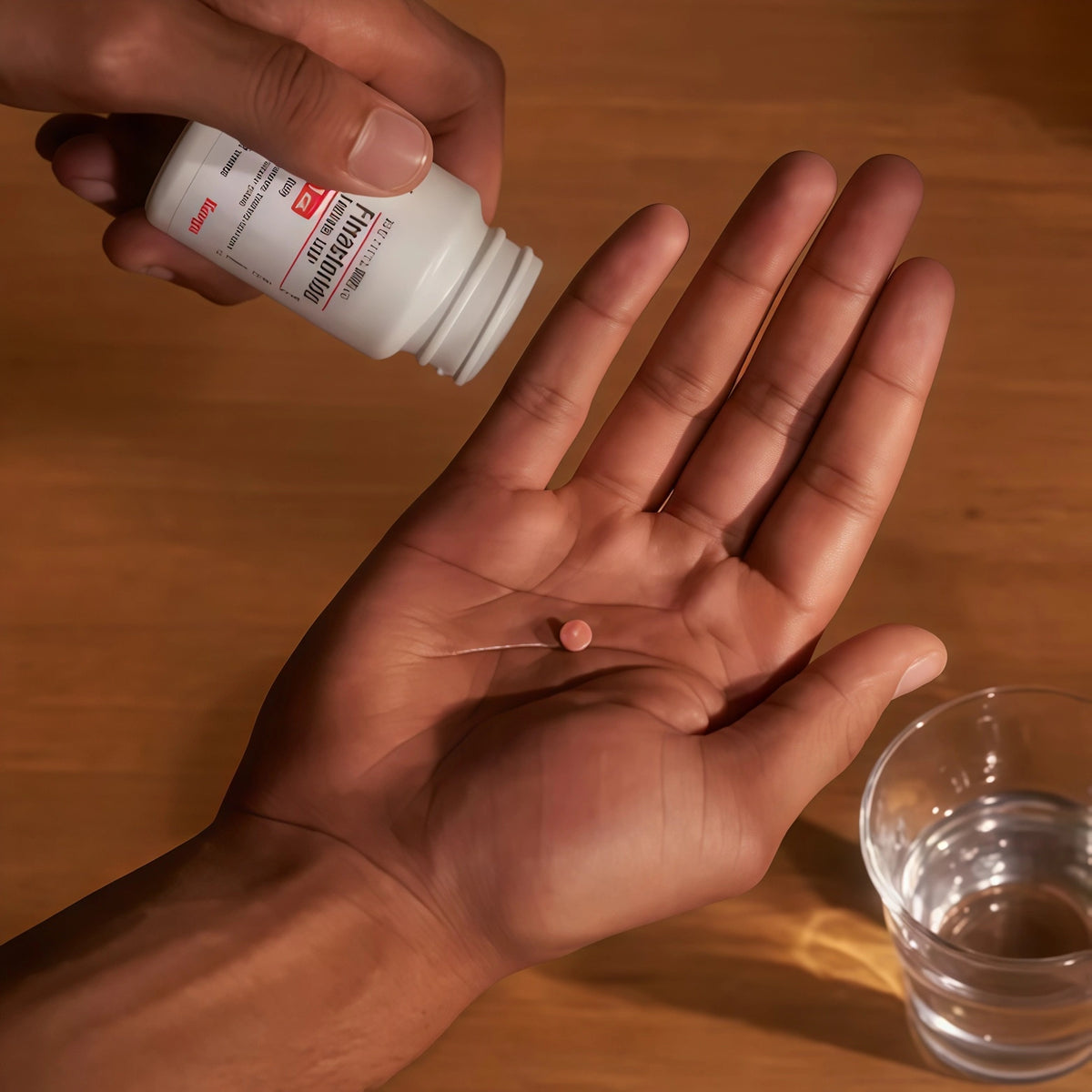


Stop hair loss with our FDA-approved prescription pill
 Clinically proven to stop hair loss
Treats overall hair thinning and receding hairline
Taken orally once per day
Can also promote hair regrowth
Results within 4-6 months of consistent use

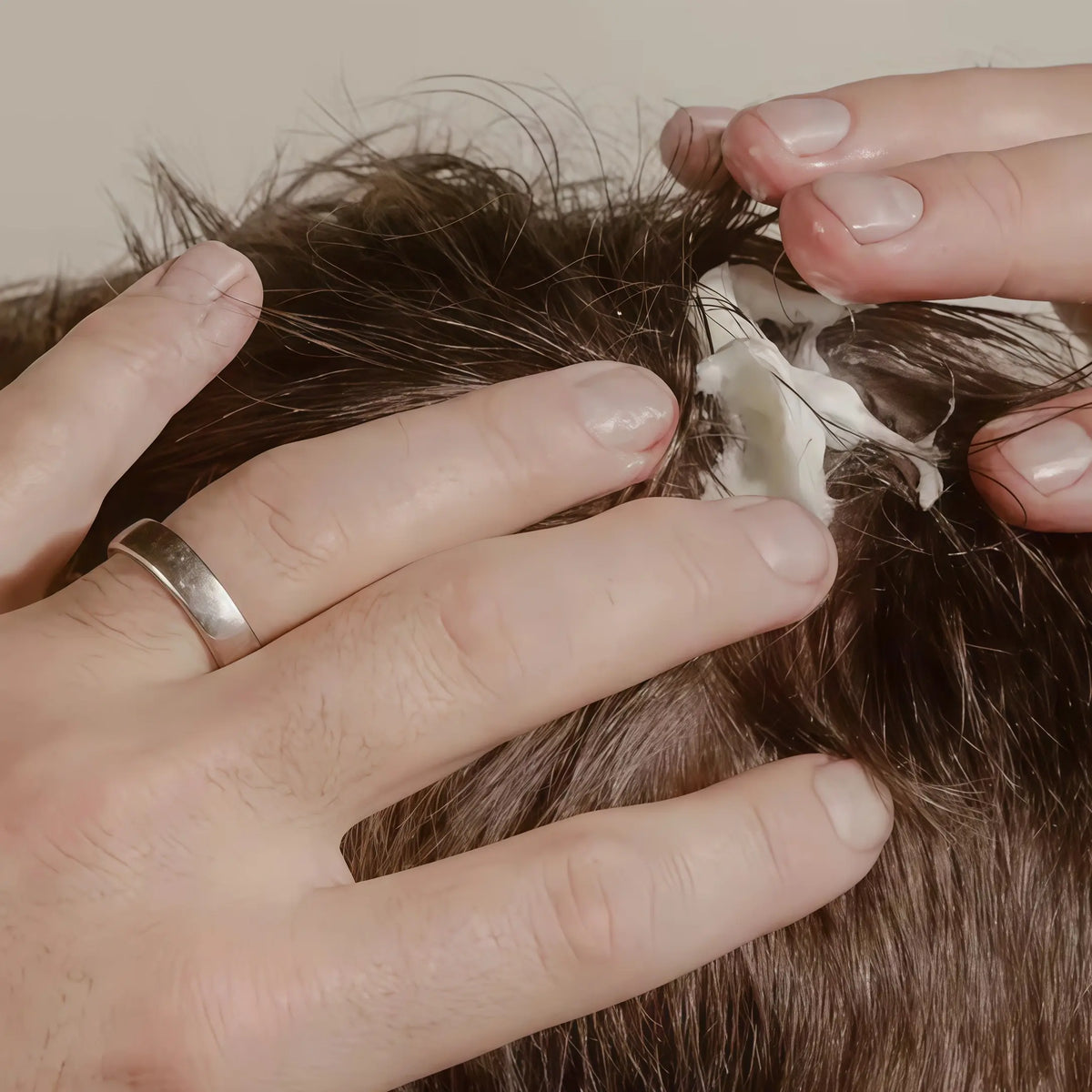
Grow thicker, fuller hair with our FDA-approved topical foam
Clinically proven to increase hair growth
Treats hair loss and hair thinning
Applied topically twice per day
Results within 4-6 months of consistent use
Can increase hair growth by up to 35%

Once a day keeps hair loss away
How to use finasteride
1 Finasteride may just be the easiest way to stop hair loss—it’s just one tablet taken orally once a day.
2 For best results, try taking your dose of finasteride around the same time each day.
3 Do not take more than directed. If you miss a dose, skip the missed dose and return to your normal schedule.

Your hair growth champion
How to use minoxidil foam
1 Disperse half a capful of foam onto your fingers and apply to areas of the scalp affected by hair loss.
2 Gently massage onto your scalp, parting your hair into rows to focus on areas with thinning hair.
3 Apply twice per day and enjoy thicker, fuller hair growth in as little as 4-6 months.
THE BALD TRUTH
Learn more about the causes of hair lossand what you can do to prevent it.

The Problem
Male Pattern Baldness, also known as androgenetic alopecia, is the most common form of hair loss. And it happens earlier than anyone expects. In fact, 2 out of 3 guys will experience some form of MPB by the time they’re 35. Even with today’s advancements in science, there’s still no known cure. The good news? There are proven treatments that can combat the symptoms.

The Causes
Genetics are the most common cause of hair loss. But don’t blame Mom. You can inherit the baldness trait from either side of your family. A recent study found that there are actually 287 genetic regions that contribute to male pattern baldness.
External factors can also play a role. Using harsh chemical dyes and relaxers can exacerbate the situation, while stress or an unbalanced diet can also lead to additional hair loss.
The Treatments
Good news. There are two safe and effective formulas — minoxidil and finasteride — that are FDA-approved for preventing hair loss. Depending on whether you have a receding hairline, balding at the crown, or overall hair loss, your provider may recommend one or both of these treatments.
In addition, Keeps offers a prescription shampoo to help clear your head of any dandruff, itching, or flakiness that can prevent your hair from looking as good as possible.

Minoxidil (generic Rogaine®) is a topical treatment that’s most effective for regrowth along the top of your head and crown.

Finasteride (generic Propecia®) is a prescription pill that’s primarily used to stop further hair loss across the entirety of your head, including receding hairlines.
Real results in just 4-6 months

6 months of treatment
"My experience with Keeps has been amazing! I'm extremely satisfied with my results. Keeps has restored my hair and my confidence!"
Virgil C.
Verified reviewer

3 months of treatment
"I've been on finasteride and minoxidil through Keeps for just three months and the regrowth already showing is incredible. I could not be happier with the results so far."
Roy
Verified reviewer

5 months of treatment
"I highly recommend it - it's clinically proven, affordable, easy to use, and best part is, it works!"
Nathan B.
Verified reviewer
IN CASE YOU WERE WONDERING
Things that do notcause hair loss
Things that do notcause hair loss

SHAMPOOING
Seriously, keep showering.

SUNSHINE
But don’t forget the SPF.

MASTURBATION
You do you.

HATS
Your fedora is just ruining
your life in other ways.

NATURAL HIGH TESTOSTERONE
Sorry, we know it’s nice to think
you’re just too manly for hair.

JUST YOUR MOM
Your dad is probably to blame
too. (Equality, now!)
Frequently asked questions
What causes hair loss?
What causes hair loss?
For the majority of men, hair loss is caused by a genetic condition called androgenetic alopecia (also known as male pattern baldness). Male pattern baldness accounts for more than 95% of hair loss in men. In some cases, hair loss can be a sign of a more serious medical condition or nutritional deficiency. It is important to consult with a licensed medical professional about any significant hair loss to determine the cause and identify an appropriate solution.
What is the best medical treatment for hair loss?
What is the best medical treatment for hair loss?
Hair loss caused by male pattern baldness can be treated with two safe and effective formulas—finasteride and minoxidil—which are FDA-approved to treat hair loss. Depending on your condition, your medical provider may recommend one or both treatment options. Some studies indicate that taking finasteride and minoxidil in tandem may be the most effective way to combat hair loss.
Can I stop hair loss?
Can I stop hair loss?
More than 95% of hair loss in men is caused by a genetic condition called androgenetic alopecia (AKA male pattern baldness). Currently, there is no known cure for male pattern baldness, but there are two FDA-approved treatments that are clinically proven to combat the symptoms of male pattern baldness by preventing hair loss and improving hair regrowth.
Can I stop hair loss? Is finasteride safe? What are the side effects of finasteride?
Can I stop hair loss? Is finasteride safe? What are the side effects of finasteride?
Finasteride is FDA approved to stop hair loss. Clinical research and long-term studies indicate that finasteride is considered safe for most men. Like all prescriptions, finastide may cause side effects, including sexual side effects. In clinical studies, 3.8% of patients noticed sexual side effect (versus 2.1% of patients taking the placebo). Finasteride should never be taken by women. Contact your medical provider if you have any concerns about potential side effects.
Is minoxidil safe? What are the side effects of taking minoxidil?
Is minoxidil safe? What are the side effects of taking minoxidil?
Minoxidil is an over-the-counter topical treatment that is FDA-approved to treat hair loss and is considered safe. The most common side effect is skin irritation. For those with sensitive skin, we recommend minoxidil foam as a gentler treatment option that is less likely to cause allergies or irritation. In rare instances, minoxidil can cause serious side effects. Contact your medical provider if you have any concerns about side effects.
Can minoxidil help me grow a beard?
Can minoxidil help me grow a beard?
We do not recommend using minoxidil to promote hair growth on any areas other than your scalp. Minoxidil is only FDA approved to treat hair loss on the crown of the scalp. Other uses of minoxidil have not been fully researched or approved by the FDA.
What is DHT?
What is DHT?
DHT, or dihydrotestosterone, is the male sex hormone that is responsible for male pattern baldness. In men that are genetically susceptible to male pattern baldness, DHT binds to receptors in hair follicles, causing them to shrink and eventually stop growing new hair over time. Luckily, DHT blockers like finasteride can block the production of DHT, ultimately stopping hair loss and promoting hair growth.
What’s the difference between finasteride and minoxidil?
What’s the difference between finasteride and minoxidil?
Finasteride and minoxidil are two FDA-approved treatments for hair loss. Finasteride is a prescription pill that stops hair loss by blocking the production of DHT. Minoxidil is a topical treatment that helps regrow hair by stimulating hair follicles when applied to the scalp. Depending on the type of hair loss you are experiencing, your medical provider may recommend one or both of these treatments.
Select the care you're looking for

Finasteride

Minoxidil
